

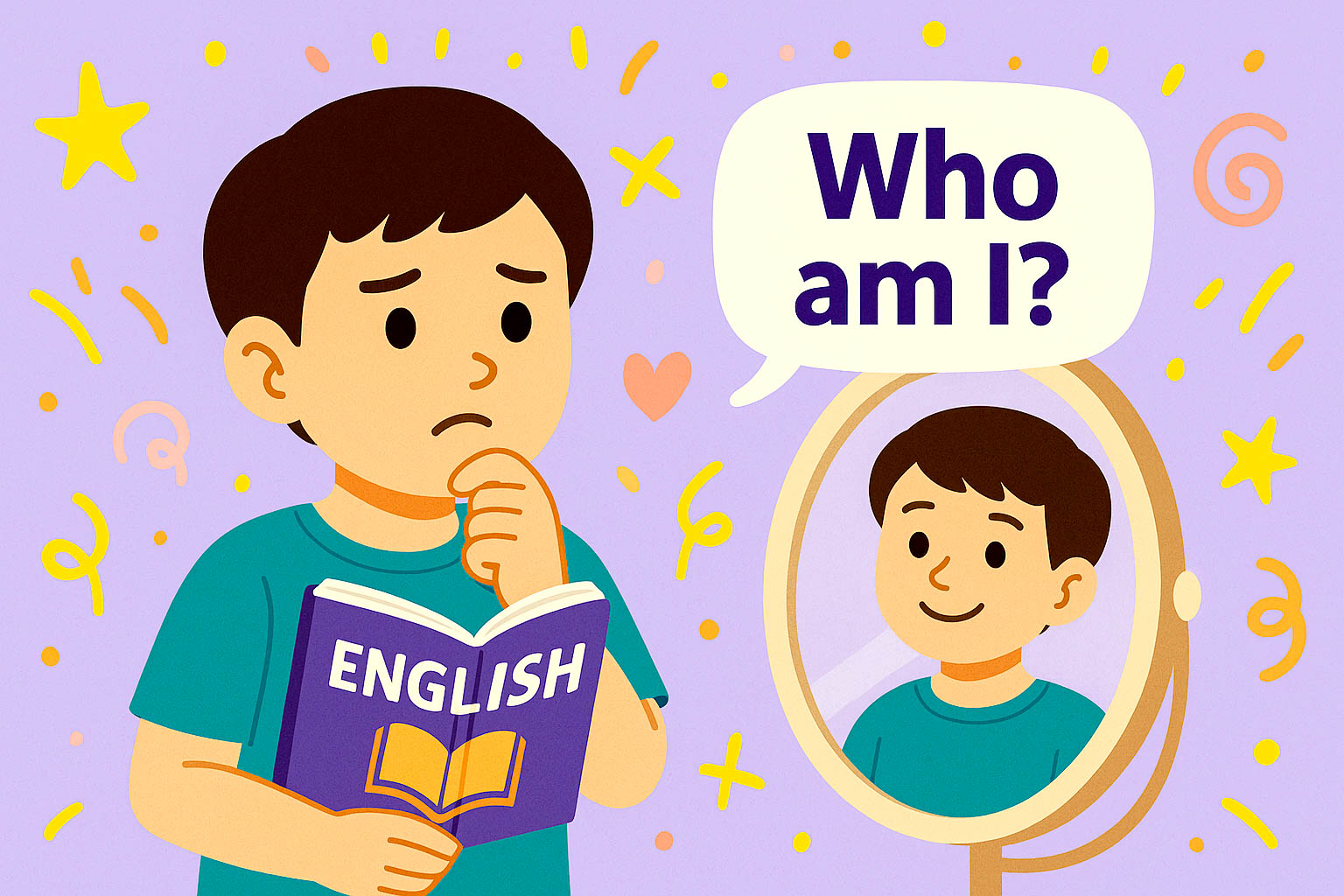
Know Yourself Before You Learn to Speak English
“Speaking English will open up the world.”
With this belief, many children begin their English studies.
But when the time comes that they can speak the language fluently,
some realize they don’t know what they want to say.
Without Something to Say, Words Are Just Empty Sounds
Even with rich vocabulary and polished expressions,
some speech can feel strangely hollow.
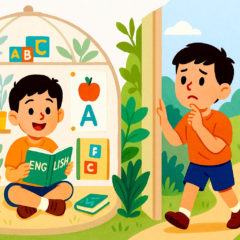
This often stems from focusing too much on how to speak—
rather than what to say.
English is a tool.
But what you express through that tool must come from within.
You cannot truly connect with the world until you first understand yourself.
In Global Settings, the Question Is Not “Where Are You From?” but “Who Are You?”
As children step into international communities,
they will increasingly face moments where they are asked not about their origin,
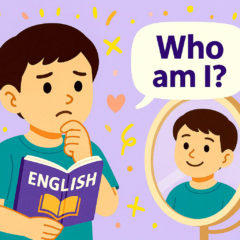
but about their identity: “Who are you?”
If they cannot answer,
“If you ask me, this is what I believe,” or
“This is where I stand,”
then no matter how fluent their English is,
they risk becoming little more than a human translator.
Language alone cannot earn trust or respect.
At Liberal Studies College, We Value the Time Before Speaking Begins
We begin by asking questions:
“What do you think?”
“Why do you feel that way?”
“How did that moment make you feel?”
Children reflect, hesitate, struggle to express themselves—
and through that very process, they begin to develop a strong sense of self.
What Words Will You Use to Tell Your Story?
Yes, the ability to speak English can be a powerful asset.
But how you use that ability depends entirely on the strength of your inner voice.
At Liberal Studies College, we believe that self-awareness and depth of perspective
are the essential educational foundations for the future—
beyond language skills alone.




No comments yet.