


When “English-Speaking Children” Become Isolated in the World
The ability to speak English is no longer considered a competitive advantage—it is increasingly viewed as a baseline requirement.
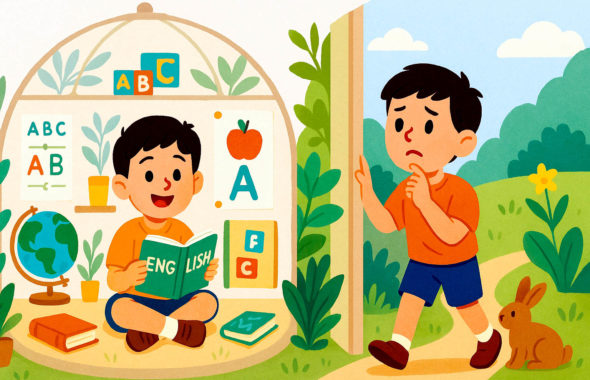
Children who have received English education from an early age, who speak with near-native pronunciation, and who confidently deliver presentations or enjoy international media without subtitles may appear well-prepared for the future.
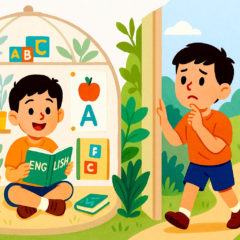
However, once they step into the global arena, many find themselves unexpectedly isolated.
Without meaningful content to convey, language alone cannot bridge the gap.
In today’s international landscape, fluency in English is not what sets individuals apart.
What matters is what one chooses to express—and the substance behind it.
It requires the ability to form one’s own thoughts, articulate them with clarity and conviction, and engage in constructive dialogue that respects differing perspectives.
Without these capabilities, even flawless language skills fail to establish trust or connection.
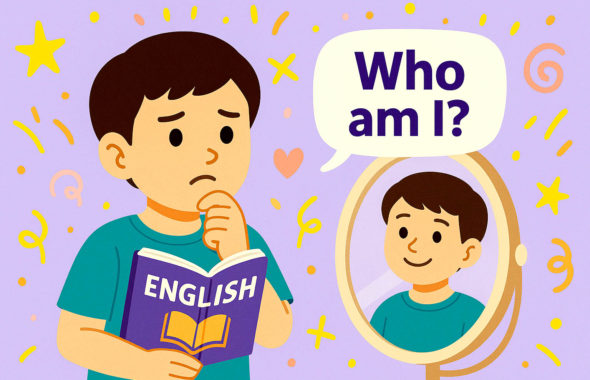
What is being tested today is not one’s accent or vocabulary, but one’s perspective, cultural literacy, and depth of thought.
The Paradox of “Speaking Without Being Able to Speak”
In practice, we increasingly observe that even children with advanced English skills often fall silent during discussions.
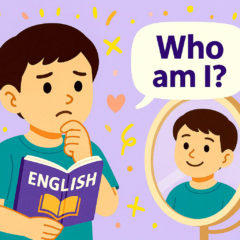
They hesitate—not because they lack the words, but because they lack the confidence or clarity in what they wish to say.
They fear making mistakes.
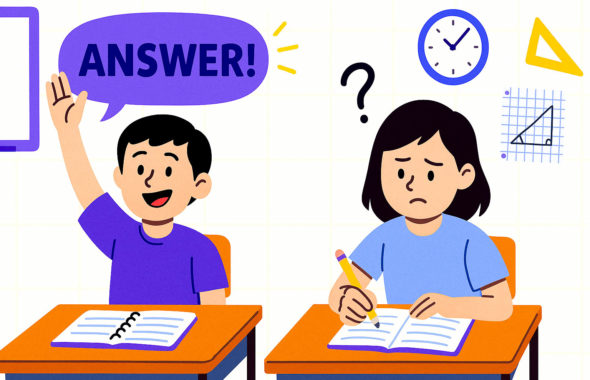
They search for the “correct” answer rather than formulating their own.
This is not a linguistic issue, but a reflection of insufficient training in critical thinking and self-expression.
While English instruction has progressed, the cultivation of independent thought has often been neglected—
a reversal that is now coming to light.
True Global Readiness Begins Beyond Language Proficiency
English is, fundamentally, a tool.
What matters is how one uses that tool—what one communicates through it, and how one engages with others.
At Liberal Studies College, we approach English as a means to a greater end:
encouraging children to ask questions, think independently, and participate in meaningful conversations.
Our mission is not merely to develop children who can speak,
but to nurture those who can express, connect, and contribute.
This, we believe, is the true role of education in the 21st century.
How do you perceive this shift?
English may serve as a key to opening the door to the world.
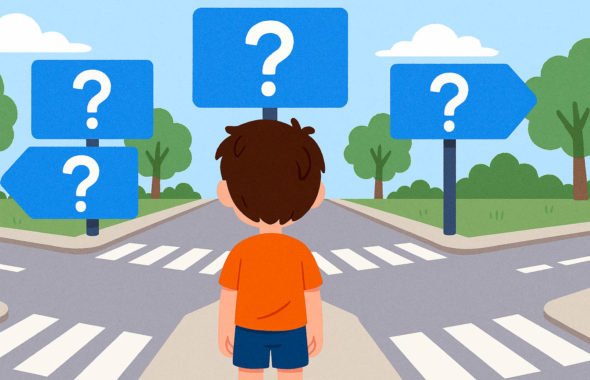
But beyond that threshold lies a more pressing question:
“What do you think?”
Let us choose learning environments that go beyond language acquisition—
and foster the ability to engage with the world thoughtfully and purposefully.


No comments yet.